
Lotte Peplow, the Brewers Association’s American craft beer ambassador for Europe, returns from the States with respect and awe for the popular hazy/juicy IPA style

Photographs: Brewers Association
Hazy/juicy IPA has come to dominate the global craft beer landscape, becoming ubiquitous throughout beer drinking nations of the world.
At last month’s World Beer Cup, the most prestigious beer competition in the world, held in Philadelphia, hazy IPA was the second largest category, with 274 entries, just behind West Coast style IPA, with 293.
Organised by the Brewers Association, the not-for-profit trade association for small and independent American craft brewers, the competition, now in its 30th year, serves as a benchmark for quality and continues to attract the highest number of entries of any global beer competition, with 8,166 this year from 50 different countries.
‘Hazies’ — How It All Began
Hazy/juicy IPA originated in New England, America, back in the early 2010s, with the emergence of a new style of beer that focused less on clarity and bitterness and more on a soft mouthfeel, unfiltered appearance, and a tropical, fruit-forward hop character.
Initially termed New England IPA, or ‘NEIPA’, in homage to the region of its birth, the approachable new style quickly became popular, with breweries eager to experiment with the soon to be ‘haze-craze’. The Alchemist brewery, in Vermont, was widely credited with creating the style back in 2011 with the launch of Heady Topper, a beer considered to be the original forefather of the style.
The Brewers Association recognised the juicy/hazy IPA style as an official category in 2018, since when it has become the first (or second) most competitive category at both the World Beer Cup and Great American Beer Festival.
During the 2010s, hazy IPAs exploded in popularity and it wasn’t long before breweries across the world were jumping on the haze bandwagon. In the States, hazies account for 10.5% by value and 8.9% by volume (off-premise scan data, NielsenIQ) of the off-premise craft beer market and 9.9% of the on-premise market (NIQCGA data/estimates).
Why are hazy IPAs popular?
Unlike classic IPAs, with their signature piney bitterness and clarity of appearance, hazy IPAs are all about the soft, velvety mouthfeel, unfiltered appearance, and juicy, tropical fruit-forward hop expression. The subdued bitterness makes them accessible and approachable to first-time drinkers as well as die-hard IPA fans.
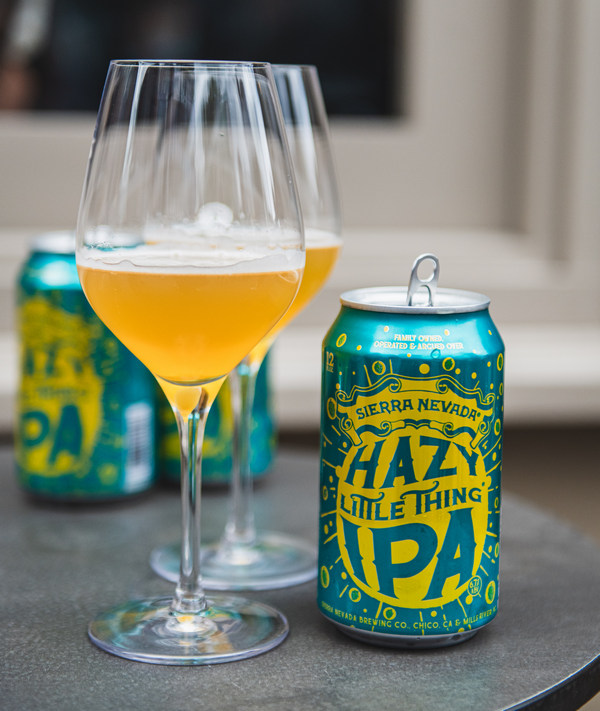
Flagship examples include Sierra Nevada Hazy Little Thing, launched in 2018 and now the best-selling juicy/hazy IPA in the USA, and widely available around the world. According to Iain Newell, European marketing director at Sierra Nevada Brewing Co, 65% of beer drinkers were not hazy beer fans or had never tried one, until they sampled Sierra Nevada’s Hazy Little Thing.
Hazy IPAs are made with the four essential components of beer, but the grain bill, hop selection, and brewing techniques are all different. For example:
- Malts: flaked oats and flaked wheat are used to create a smooth, creamy texture and mouthfeel, and the hazy appearance is achieved. The high protein content of oats and wheat adds body and fullness to the beer, without adding sweetness.
- Hops: hazy IPAs typically use hop varieties known for their juicy, tropical fruit character, such as Citra, Mosaic, Azacca, Galaxy, and Nelson Sauvin. Brewers avoid isomerisation of bittering hops, which creates the classic bitter aftertaste, but instead focus on late hopping and dry hopping after fermentation to achieve the subdued bitterness and vibrant, fruity, tropical hop character of the style. This technique preserves volatile aroma compounds that would boil off if added at an early stage. American craft brewers have a unique advantage over other brewing nations due to their close proximity to some of the world’s premier hop growing regions, allowing them to select the freshest, highest quality, most sought-after hops Many brewers visit the hop fields themselves multiple times a year and work directly with the growers. They not only inspect the harvest, but crush open the hops in their hands to examine the resins and oils, as well as inhale the all-important aroma that defines world-class hazy IPA. Such attention to detail helps produce award-winning American craft beers.
- Yeast: brewers favour strains that produce fruity esters during fermentation and enhance hop biotransformation. They need yeast to stay suspended in the beer for longer, thus contributing to a hazy appearance and fullness of body.
The future of hazy IPA
What started as a regional experiment has exploded into a global phenomenon, with almost every brewing nation in the world producing the style. The fact that American craft brewers pioneered the style is testimony to their inventive, innovative, and daring approach.
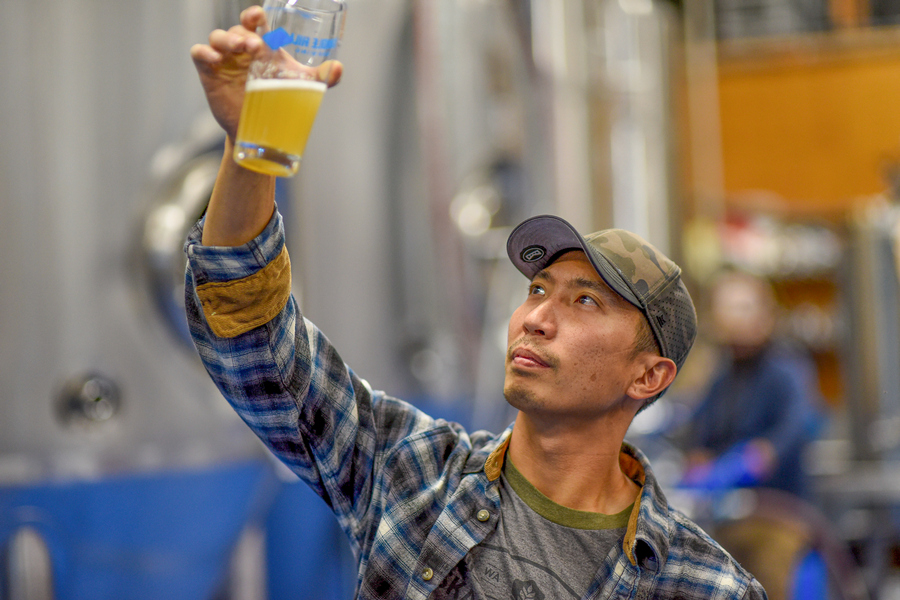
But will it last? Toppling Goliath Brewing Co, from Decorah, Iowa, produces award-winning hazy IPAs and is currently available in the UK (while stocks last). Its brewmaster, Mike Saboe, has the final say: “While we may have a reached ‘a’ peak in the haze craze, I don’t think it’s the only peak we’ll see in this category as time goes on.
“IPA as a broad category has captured people’s attention since its beginning, and now a well-crafted hazy has expanded and diversified that interest. What began as a way of layering more hop flavour into a beer using different techniques and newer varieties of high-oil content hops resonates with beer drinkers because of its authentic aesthetic and polished, but unfiltered flavour.
“With the continued development of new hop varietals and almost infinite permutations of flavour available, the beautiful glow and vibrant aromas of a fresh hazy is something that I believe will always be a part of the beer drinker’s rotation.”
US craft beer in the UK
The UK is an important export market for American craft beer, accounting for 8.2% of all exports and ranks as the third largest market globally. American craft beer is available through selected bars, pubs, and dining venues, as well as bottle shops, off-licences, and supermarkets, and online from Athletic Brewing, Brew Export, Beer Merchants, Cask International, Cave Direct, Distant Lands, Hop the Pond, and Sierra Nevada UK.
About the Brewers Association
The Brewers Association (BA) is the not-for-profit trade association dedicated to small and independent American brewers, their beers, and the community of brewing enthusiasts. The BA represents 5,600-plus US breweries. The BA’s independent craft brewer seal is a widely adopted symbol that differentiates beers by small and independent craft brewers. The BA organises events including the World Beer Cup, Great American Beer Festival, Craft Brewers Conference, and BrewExpo America, and American Craft Beer Week. The BA publishes The New Brewer magazine, and Brewers Publications is the leading publisher of brewing literature in the US. Beer lovers are invited to learn more about the dynamic world of craft beer at CraftBeer.com and about homebrewing via the BA’s American Homebrewers Association and the free Brew Guru mobile app.
About the author
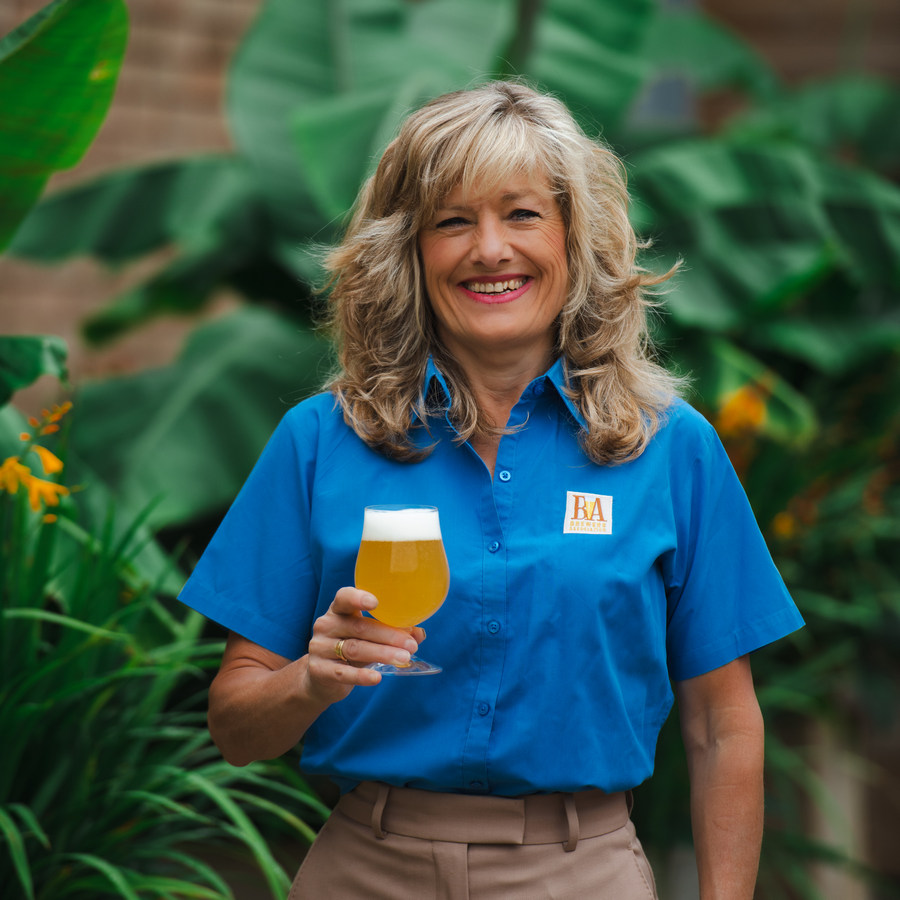
Lotte Peplow is the American craft beer ambassador for Europe for the Brewers Association and is based in London. She is a certified cicerone, BDI-accredited beer sommelier, beer writer, author, beer communicator, international beer judge, homebrewer, and beer lover.