
“Give me your tired, your poor, / Your huddled masses yearning to breathe free, / The wretched refuse of your teeming shore. / Send these, the homeless, tempest-tost to me, / I lift my lamp beside the golden door!”
These are those famous last lines of “The New Colossus,” the poem inscribed on the Statue of Liberty. Much has been written about America’s East Coast immigrant stories of the early 20th century—newcomers moving into the growing community neighborhoods of big cities, working hard to achieve their American dreams. But the West Coast (California and San Francisco, in particular) has also been a land of golden dreams. My grandparents and many other Eastern European migrants, for example, share a lesser-told story of how West Coast beer factories changed their lives for the better.
Early San Francisco History
San Francisco has always been a city associated with people looking to make their fortunes. Richard Henry Dana, a Harvard-educated Bostonian in poor health, took to the seas in 1834 as a common sailor and recorded his experience in his popular memoir Two Years Before the Mast, which provided some of the earliest portrayals of San Francisco in print. Thanks to the Gold Rush, San Francisco emerged from a quiet village established around Yerba Buena into the place Dana wrote about in 1858 in his essay “Twenty-Four Years After” as a bustling city full of “worlds not realized.”
Dana noted that, in reality, few made their fortunes in gold. Instead, many of the would-be prospectors became merchants and businessmen, some of whom entered the beer industry.
Beer in California actually predated the Gold Rush. In 1843, merchant Benjamin T. Reed’s firm brought the first recorded order of bottled beer into San Francisco. For Dana’s years and beyond, brewers in the Bay Area relied on making “steam beer,” a description for letting the heated mix of malt and water cool in specially designed rooftop pools before yeast was added. The venerable Anchor Brewing Company, though no longer operating, still holds the trademark name for this brewing process.
While beer halls enjoyed a period of popularity in the early 1900s (as portrayed in one of my favorite early San Francisco novels McTeague by Frank Norris), they also experienced lean times—the Great Earthquake of 1906, Prohibition, anti-German sentiment after World War I, and the Great Depression, to name a few, disrupted the fortunes of several important beermakers. But many more beer pioneers emerged and rebuilt West Coast brewing empires such as Lucky Lager, Anchor, and Acme Brewing.
However, it was Milwaukee Brewing, later renamed San Francisco Brewing Corp. in 1935 and then Burgermeister in 1956, that would begin the transformation of the San Francisco Slovene-American immigrant community.
My Slovene San Franciscans
My own family’s story reflects similar arcs for many of the other San Francisco Slovene families. My grandfather Alois (“Louis” or “Louie”) was born in the United States in 1912 while his family was in Idaho working in the mines and agricultural jobs. An opportunity to return home post-World War I to uneasy peace in the new Kingdom of Yugoslavia (a South Slavic state composed of what is now Croatia, Serbia, and Slovenia) seemed promising for the family when Louie was a young boy.
But fortunes changed. In the height of the Great Depression, Louie was sent back alone as a young adult to the United States, where after a stint in Oregon near his aunt’s family, he eventually ended up in Montana doing manual labor until World War II broke out. He enlisted in the United States military and served under General Patton’s third army, including the second wave at D-Day.
Postwar San Francisco was a promising place for a young veteran, and many Slovene-Americans like my grandfather were encouraged to move there after being discharged. They got jobs working for Soule Steel, building landing craft, steel barges, and crane ships for the war effort. In San Francisco, he married my grandmother (and his brother married my grandmother’s sister) and started a family. My grandfather and the other Slovene men liked the work—it paid well and was making progress for the community. But, Louie perhaps sensed that things weren’t settled yet.
Slovene-Americans in San Francisco
The Slovene-American community was tight knit in the mid-20th century. Many young Slovenian men had immigrated to the United States in the 1920s, mostly to the Midwest (Ohio, Pennsylvania, and Illinois) or mining and agricultural towns in the West (Idaho, Montana, Colorado, and Oregon). Because early records grouped Yugoslavian cultures together, it’s hard to say for certain how many Slovenians were in San Francisco in the 1950s, but the 1920 census estimates show 228,000 Slovene-Americans and their children in the United States.
For my grandfather’s generation in San Francisco, most of the men either worked in a factory such as Soule Steel, or if they had learned a trade, partnered with other Slovenian men to buy and renovate the old Victorian houses, one or two a year.
As the Soule Steel factory started shrinking operations a few years after World War II, the Slovene men began looking for something new. The Klemens family were Slovene immigrants who had moved to San Francisco earlier than most, and Joseph Klemens had been an early employee of Burgermeister after Prohibition ended in 1933. He encouraged his nephew Anton “Tony” Klemens to get a job there in 1942. (Tony is my uncle’s dad—my mom’s sister married into this Slovene family in the 1970s.)
The union held Tony’s job during his years of military service, and so he happily returned to work after the war where he discovered Burgermeister had expanded operations. It was good, steady work and, within a few years, more than a dozen Slovene-American men were employed on beer factory floors.
The Slovene-American Beer Workers
The 1950s were a prosperous time for San Francisco’s large-scale brewers. Companies came from the Midwest and set up large factories to help originally in the war effort, and the expanded operations continued with names such as Hamms, Schlitz, Regal Pale, and Acme. But “Burgie,” as it was known locally, was the one where the Slovenes truly thrived.
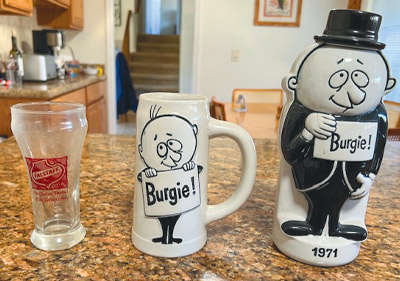
Many of Burgie’s managers were immigrants themselves who boldly decided to hire other immigrants, despite local discrimination. It was significant that they were hiring Slovenes, as my dad recalls signs in some business windows in the 1950s and even 1960s that “No Bohunks [Czech, Slovenes, Slovaks] Need Apply.”
My grandfather and the dozen or so other Slovene men toiled alongside mostly Irish, French, Italian, British, and Scottish workers. The managers also hired a small percentage of African American workers starting in the 1970s. “It was a melting pot in the brew floors,” my dad Dan explained. “For the most part, everyone got along—they were there to work and bring beer to their neighborhoods.”
Slovenes were hard workers, happy to be employed in the factory rather than in the mines where they first started out in the United States. They labored in the warehouses packing the glass bottles, later shifting to the large pallets of cans, or moving the large kegs with the forklifts; stood on the lines putting the bottles in the fillers and adding labels before sealing the caps or moving the cans onto pallets; or served as quality control, testing products and pH levels. A few worked in the offices as managers and even fewer helped with the brewing, but most did blue-collar labor.
Beer factory work was good pay for laboring with your hands and offered a rare opportunity for immigrant families to experience upward mobility. Most importantly, the union support meant a pension upon retirement. During the Teamsters’ 1973 boycott of the Coors plant due to low wages, union-busting efforts, employment discrimination, and automation efforts, Slovene men like my grandfather were in full support of the union efforts.
My dad estimates that at the height of their work, a typical beer factory floor with up to 40 workers and three to four bosses filled as many as a half-million cans and bottles in an eight-hour shift. During the colder seasons of the year, the Slovenes would only work the day shift due to the United States’ waning demand for beer. During the summers, however, the San Francisco factories would expand production and the Slovenes could work extensive overtime—double shifts during the swing and graveyard schedules were common.
The summers also gave opportunities for the Slovenes’ older sons to join the union in order to cover vacation and overtime shifts for the regular workers. Many of the young men in my dad’s generation worked in the factories to pay their way through college. My uncle bought his first car in high school (a blue Dodge Super Bee with a black vinyl top) from his own beer factory wages.
During the Vietnam War, the San Francisco brewers listened to the workers—many of whom were veterans themselves—talk about their sons who had been drafted and sent a world away. “When they saw a shipment destined to go either via air or by boat to Vietnam, the men would line the pallets with newspapers, magazines, or other papers to share stories from home,” my dad says. For him, having spent most of 1971 in Vietnam with the Navy teaching English to Vietnamese servicemen and women, it was a welcome treat to read the news and taste the favorite beers from where he’d worked.
Changes and Legacy
As Richard Henry Dana wrote all those years before, San Francisco is a city of change. In 1965, Anchor Brewing was in dire financial straits. Fritz Maytag, the grandson of the Maytag appliance empire founder, came in as a stakeholder and eventually became full owner. It took 10 years for Anchor Brewing to make a profit, but it helped usher in the era of the craft breweries that we know and love today in California and around the country.
But more than just switching to a different business model, technology also strongly influenced San Francisco’s breweries. Just as the Bay Area was home to the computer revolution, so too did the factory floors see new innovations in automation. By the time many of the Slovene men of my grandparents’ generation retired in the late 1970s and early 1980s, their jobs were starting to be eliminated in favor of machines that could perform some of the same tasks or streamlined production. Some men of my dad’s generation who had hoped to stay on for their careers moved to the Busch plant outside of the city or switched to the 7UP, Coca-Cola, and Dr Pepper plant to assist in syrup production.
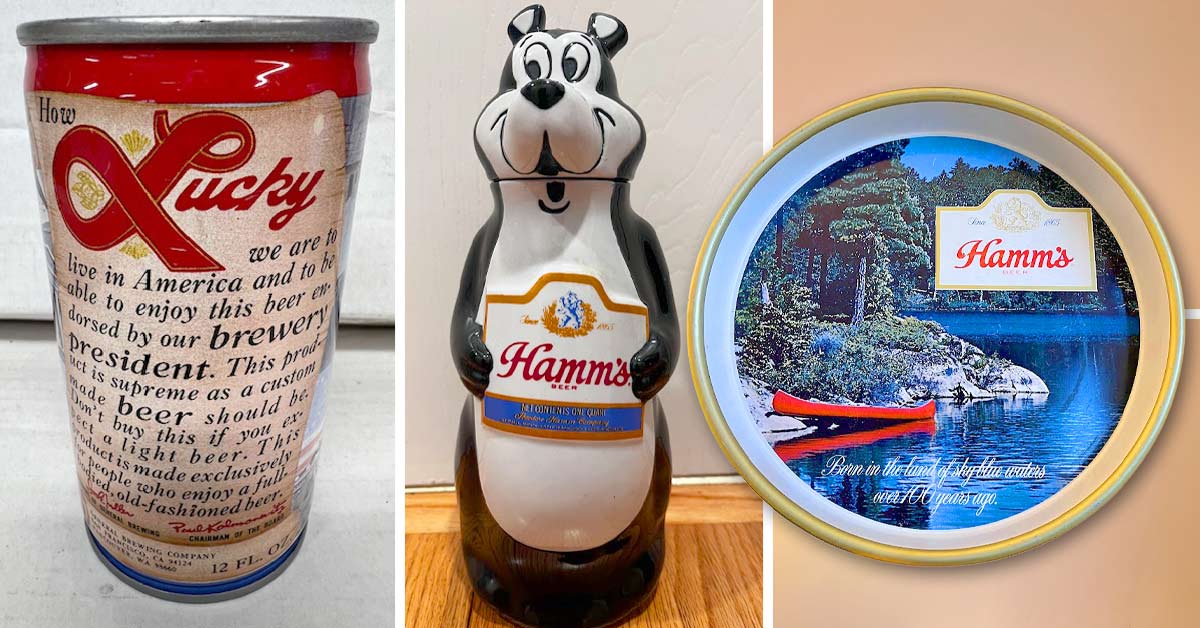
By the time I was born in the 1980s, the story of the Slovene-American workers in the San Francisco beer factories was told only through the memorabilia found in their homes and in the choices their families made in buying drinks for celebrations. I grew up visiting my grandparents’ home, seeing the old pinup girl calendars and trays used for promotional displays stacked neatly in their basement, and listening to my dad order the local beers when we went on vacations—buying only California beers to drink with dinner at home.
While most large-scale beer factories are no longer operating in San Francisco (the old Burgermeister factory building now houses a Costco, for example), the city is still considered regionally significant for beer. SF Beer Week, held over 10 days in late February, features hundreds of Northern California breweries large and small across the Bay. The festival includes several European bottle shops and restaurants that include beers from Slovenia as the country has developed a thriving beer culture based on two main Heineken-owned brands: Laško and Union.
While I was born too late to join in the beer factory tradition, I’m drawn to the stories of California, and writers such as Dana, Norris, and Steinbeck who describe the places where my family established roots and prospered, thanks to the work of their hands. And, as I give a toast for any celebration—sometimes even at SF Beer Week—I often offer one of my favorite lines from John Steinbeck’s 1945 novel Cannery Rowas a small tribute.
“There’s nothing like that first taste of beer!”
The author would like to thank beer historian Brian Alberts along with her editors for their assistance on this project. Special thanks also go to her dad Dan Judnick and uncle Anton Klemens Jr. for sharing their stories.
Maria Judnick teaches English and sustainability-themed courses at the college level while also freelancing and working on a novel. In addition to other academic roles, she has facilitated 7 National Endowment for the Humanities teacher institutes (some on John Steinbeck, some related to California’s immigration stories) and recently became a UC Master Gardener. Maria lives in her hometown of San Jose, CA with her husband and two young sons.
CraftBeer.com is fully dedicated to small and independent U.S. breweries. We are published by the Brewers Association, the not-for-profit trade group dedicated to promoting and protecting America’s small and independent craft brewers. Stories and opinions shared on CraftBeer.com do not imply endorsement by or positions taken by the Brewers Association or its members.