
Heineken UK has launched a regenerative malting barley programme, in partnership with maltsters Muntons and Boortmalt, barley merchant Cefetra, and agronomist Soil Capital.
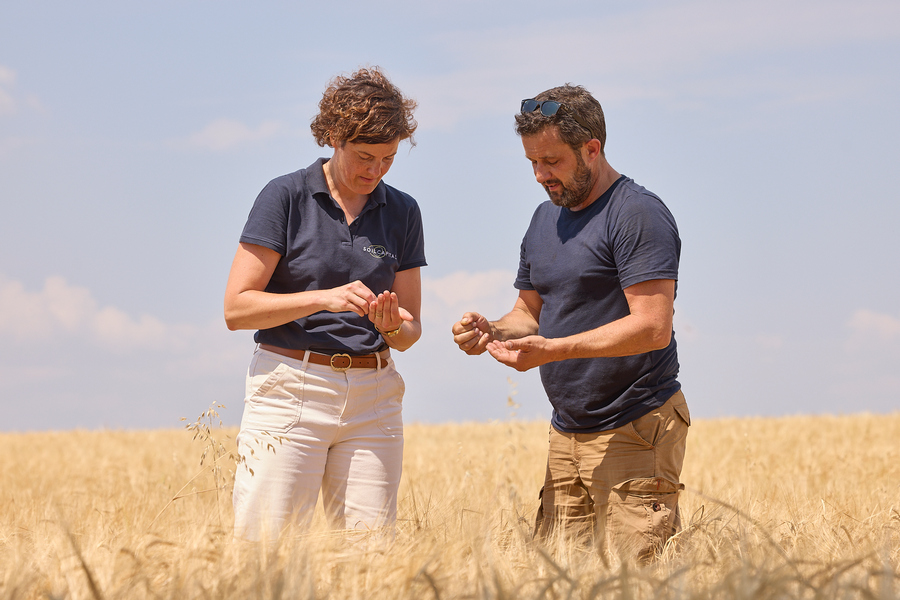
Nathalie Bouche, of Soil Capital, with farmer Ollie Stobo
Farmers will be paid a premium on regenerative barley yields, helping to reduce the risk of changing farming practices and making the transition commercially viable. This approach, combined with the scale of the programme, sets it apart from other regenerative agriculture malting barley initiatives in the UK to date, says Heineken.
Regenerative agriculture focuses on farming methods designed to improve soil health, retain carbon in the soil, support biodiversity, enhance water management, and build resilience against climate change.
In 2027, almost half of the malted barley sourced by Heineken UK will be grown through regenerative agriculture practices, marking a major step in the company’s move to support the transition and make regenerative farming part of mainstream beer production.
Heineken UK is the UK’s largest beer, cider, and pub company, brewing more than 1.3 billion pints of beer every year and supplying 80% of UK pubs. Over 95% of the beer sold by Heineken UK is brewed on home soil, underlining the importance of developing more sustainable farming practices for UK-grown ingredients.
The programme will focus on barley-growing regions across much of England and Scotland, including East Anglia, the East Midlands, South East, South West, Fife, and the Scottish borders.