
Breweries are never just breweries. They go beyond just a production facility, with their brewpubs and taprooms anchoring them in the local community, making them a place to regroup and rejoice. Breweries open their doors to curious beer enthusiasts, sharing their knowledge and passion.
Over the last decade, brewery owners have been getting creative with their brewery’s extended spaces, adding coffee shops and workspaces for patrons to come for extended periods; outdoor spaces welcoming campers and RVs; and even hotels.
But with pressure from both the economic climate and the need to stand out from the crowd, some brewers are redefining their brewery’s very concept and evolving its parameters.
Stronger Together
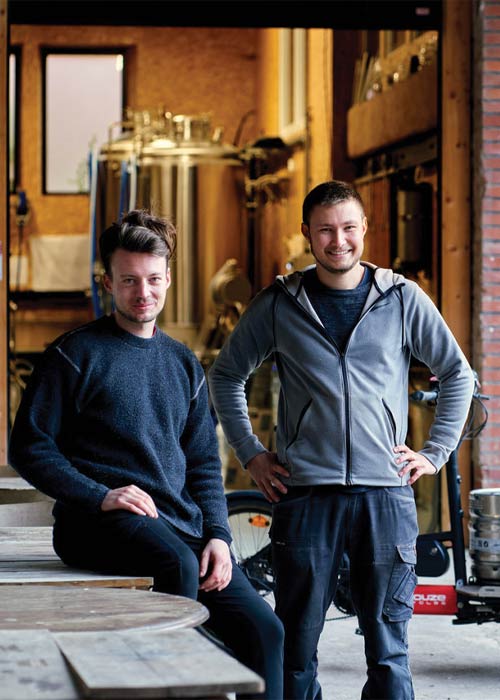
When Eliott Pernelle and Etienne Voinson decided to start Brasserie Les Semblables in Alsace, France, they were looking for a very specific place to settle. “We didn’t want to be alone, lost in an industrial area,” Pernelle explains. “We wanted to be part of a collective. That’s why we thought about a tiers-lieu.” A tiers-lieu (or “third place”) is a type of venue more common in the country, often run by an association with an educational, sustainable, or cultural goal.
After visiting a few places, Pernelle and Voinson chose Oasis Multikulti, a tiers-lieu settled on an old farm in the small Alsatian village of Mietesheim, close to the German border. Run by volunteers, the space offers a wide range of activities (writing, pottery, and knitting classes), a community garden, and a farmer’s market. The brewers installed their equipment in the former stables, with room to expand if necessary.
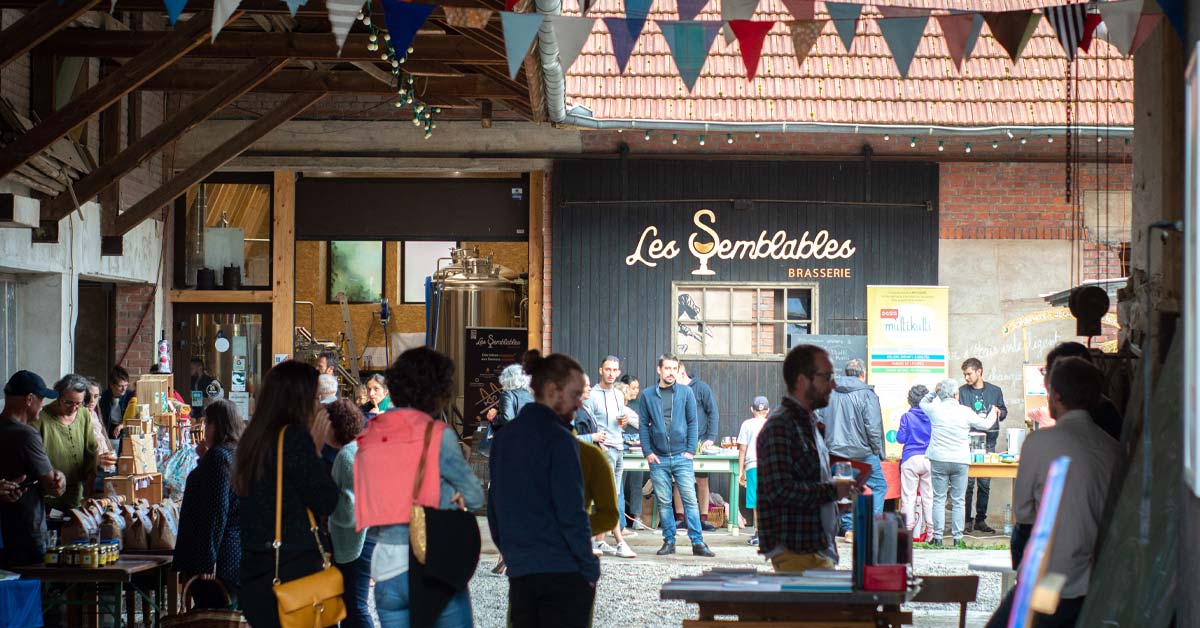
This decision has its perks: Les Semblables benefits from a well-known location, where people visit to attend a course or buy something at the farmer’s market. “It’s a strength we would not have had if we had started from scratch,” Pernelle says. But the duo also has to roll up their sleeves and commit to some volunteer work to keep Oasis Multikulti up and running.
“We could just rent the space and do nothing to help the association, but that would be a bit unfair,” Pernelle says, as he volunteers his time to handle the tiers-lieu’s social media. “This is why we wanted to be in this type of community space in the first place: to do something together.”
Brewing has long been intertwined with the concept of community. Take the German tradition of communal brewing called Zoiglbier, where non-professional brewers share a communal brewhouse at the heart of their village. Five Bavarian towns still proudly maintain that centuries-old tradition, which has been recognised by UNESCO as part of Germany “intangible cultural heritage” since 2018.
In Brussels, Brasserie Witloof’s founder, Thomas Detourbe, took inspiration from the concept when he contacted Belgian microbreweries with a simple question: why not open a brewery where the equipment is shared between all of us? La Bagarre, Janine, and 1Bière 2Tartines responded, and CoHop opened in Brussels in 2021. La Flaque joined as the fifth brewery in 2025.
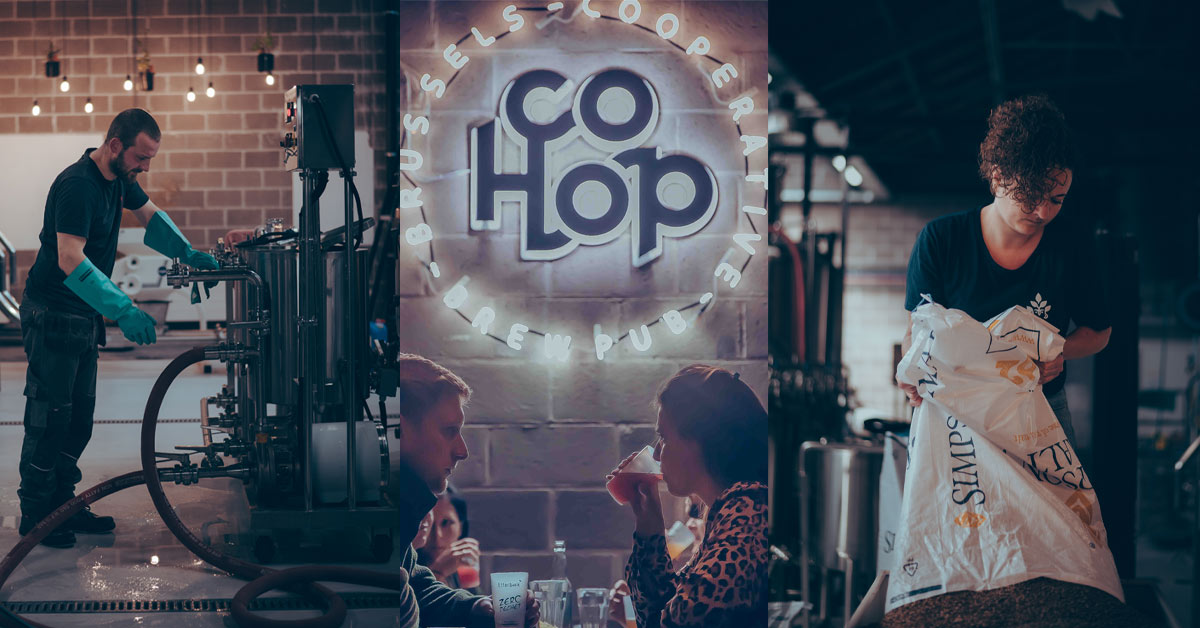
“We were all contract brewing and wanted to have our own brewery, but it was too difficult economically. Sharing the space and equipment made sense in that way,” says Rémi Pequin, CoHop’s coordinator and founder of La Bagarre. “This also allows us to approach beer making more sustainably—we only need one brewhouse instead of five, if we had all settled separately.”
To make the project work, the team had to prioritize communication and organization. Every brewery has a predetermined mission: one is in charge of managing the brewing schedule, one takes care of ordering raw materials for everyone, while another deals with manners such as equipment maintenance. The taproom serves everyone’s beer and a restaurant onsite makes sandwiches with Janine’s bread—the brewery is also a bakery.
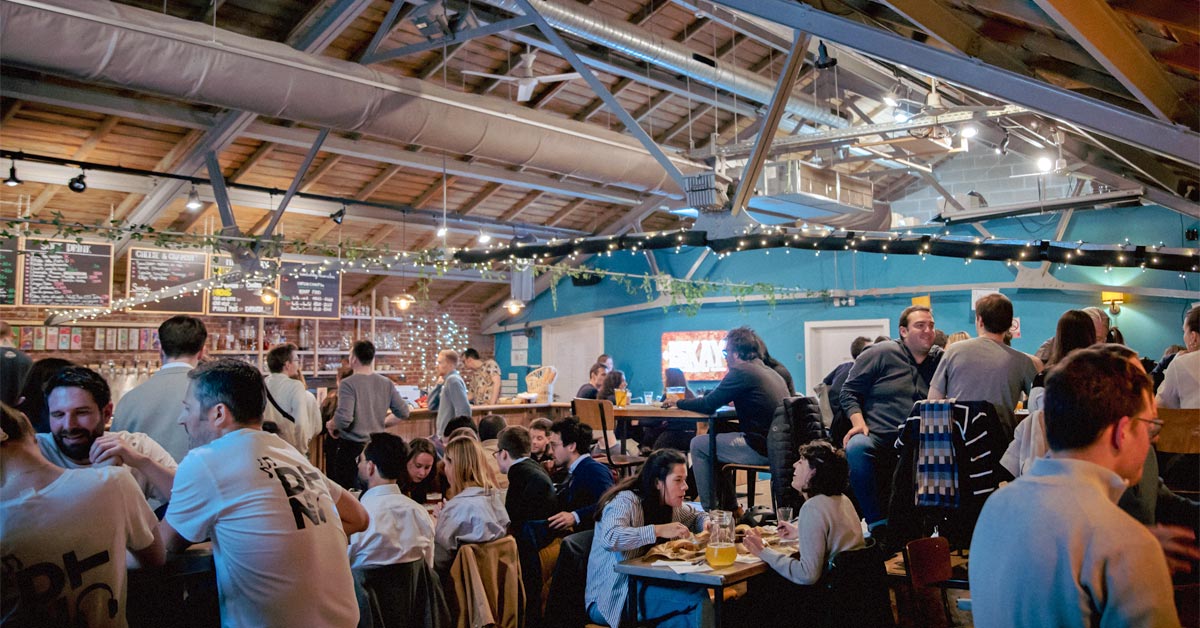
“It’s a tough organization, but we didn’t want one brewer making the beers for everyone; every brewery has its own team and brewers,” Pequin says. “We’re sharing a lot but it’s important for us that each brewery keeps its own identity and diversity.”
Both Pequin and Pernelle don’t see their projects being successful any other way than amongst a collective. “It takes a lot of commitment, but if we were to do it again, we would take the same path,” Pernelle says.
“Managing a brewery with five teams is already difficult enough, considering the current economic climate,” Pequin adds. “Why would anyone want to do this alone?”
Focus on Fermentation
Reimagining what a brewery can become can also apply to what’s inside the fermenters. With beer, there’s always a new trend to follow, a pattern that emerges out of nowhere, or a lost tradition finding a new audience. This can also extend to beer styles as well as the names breweries choose to represent their brand and what they want to bring to the table. One concept that is popping up more and more is at the base of the brewing process itself: fermentation.
Fermentery Form makes co-fermented beer using winemaking techniques such as the Solera system in West Kensington, Philadelphia; Fox Tale Fermentation brews beer and kombuchas in San Jose, Calif.; l’Annexe brasserie-fermenterie in Belgium makes beer and fermented beverages with flowers; The Fermentorium in Wisconsin offers beer, apple ale, and cider; Fermenterie des Champs Marmo in France, which defines itself as “an experimental place for alternative fermentations,” produces beer, cider, kombuchas, and more. And the list goes on.
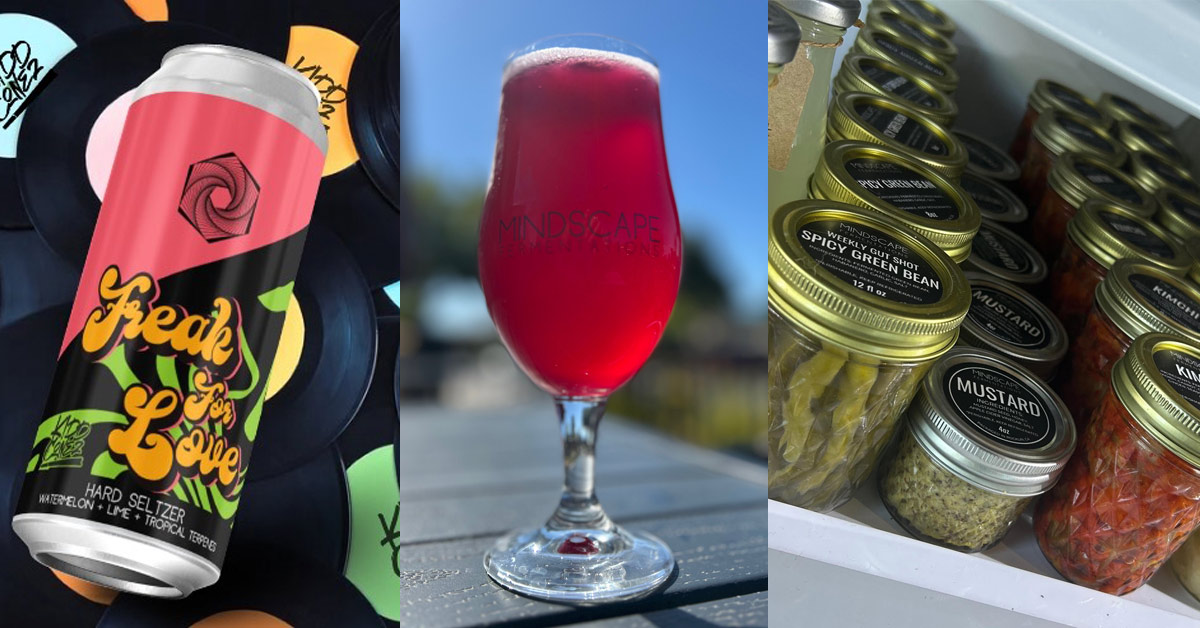
Lauren Price and Lauren Houston, co-founders of Mindscape Fermentations in Rocklin, Calif., say they wanted to “create something that went beyond the traditional definition of a brewery” and see themselves more as a fermentorium. “We saw it as a way to keep ourselves really interested and excited, because there’s a plethora of options to ferment, but also as way to diversify our clientele,” Houston explains.
“We kind of took a risk,” Price adds. “Because when you say ‘brewery,’ people know exactly what to expect. So we were a little hesitant to call it a fermentorium or fermentation, because we knew that that was going to be something that had to be more education based.”
Though they’re still passionate about beer, Price and Houston also see consumers looking for alternatives such as low-alcohol beverages (whether for health reasons, dietary restrictions, or simply the need to explore) and try to meet those needs “so that if beer declines, maybe it’s not a big deal because our kombucha may rise, or our fermented foods, or our seltzer, or something else.”
Even if they take a bit more time explaining their concept, Price and Houston believe their choice to explore the diversity of fermentation has only brought them a more diverse crowd in return. “Unlike most other breweries, I would say that we probably see double the amount of women, with a wide range of ages, too,” Houston believes. “I want us to have as diverse of a community as we can, and our mindset and focus on sustainability and health is how we speak to people.”
Anaïs Lecoq is a French freelance writer and author focusing on the French beer industry, its culture, and history, for French and English-speaking publications. Her first essay published in 2022, “Maltriarcat — quand les femmes ont soif de bière est d’égalité,” explores beer, gender and sexism. In 2023, she won first place in the Best Brewery Profile category at the North American Guild of Beer Writers Awards.