
Europe’s independent brewers are showing their determination this year, despite four in 10 saying that survival is their main priority.
A new report published today shows that, in the face of international turmoil, energy prices are the top challenge for independent brewers, with half expecting either no growth or a decline in turnover.
Yet behind these sobering figures lies a sector determined to adapt, invest, and defend Europe’s authentic beer culture.
These findings are detailed in a new, first-of-its-kind report by the Independent Brewers of Europe (IBE), a cross-border alliance founded in 2024 to represent and protect independent brewing across the continent. Bringing together national associations from Europe, with continued expansion under way, IBE advocates for fair market conditions, transparency, and the long-term viability of small and medium-sized independent breweries in a sector increasingly dominated by global corporations.
The report, covering more than 3,000 independent breweries, provides a detailed snapshot of the pressures and opportunities shaping the sector across 12 European countries. It shows them grappling with energy price volatility, taxation pressures, and intensifying competition from multinational companies which control a significant share of the beer market.
Most independent breweries remain small businesses: 60% report annual turnover of less than €500,000. Despite their size, their local footprint is considerable. More than a quarter (28%) of beer is sold directly to consumers through taprooms, bars, shops, and pubs, while 75% of breweries actively support local causes.
The report also highlights a generational shift in drinking habits. Younger adults are consuming beer less frequently than older generations, and a higher proportion choose not to drink alcohol at all. However, the data suggests that when younger consumers do choose beer, they are more focused on quality, authenticity, and local production. In other words, they may be drinking less overall, but drinking better.
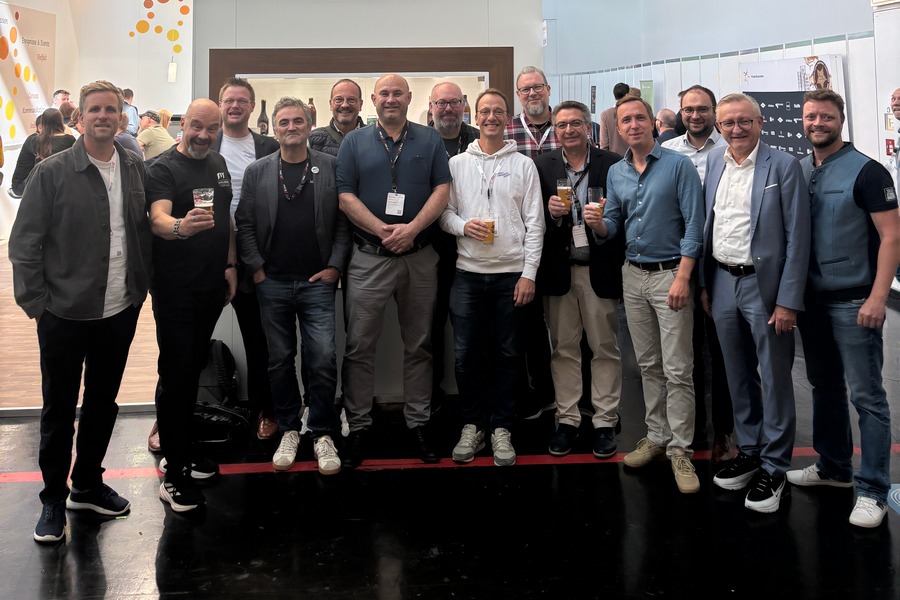
Independent brewers photographed at DrinkTec, in Munich
To navigate current headwinds, many independent brewers are diversifying. Some 43% now produce additional products, most commonly soft drinks and sodas, while non-alcoholic beer is gaining importance as consumer interest in no- and low-alcohol options grows. Across Europe, beer styles vary widely, but pale ales, India pale ales, and pale lagers remain the most commonly produced categories among independent breweries.
“Independent breweries represent an authentic and deeply rooted beer culture that needs defending,” said Barry Watts, chairman of IBE and SIBA’s head of policy and public affairs (UK). “Sadly, too many independent brewers are having to focus mainly on survival and, with current international events, energy price shocks are their top issue. Yet despite this, they are determined to do things better, to improve their businesses, and continue to make innovative beer styles enjoyed by drinkers across the continent.”
Yet the report also highlights cautious optimism. More than a third (37%) of brewers plan to prioritise improving beer quality this year, and 35% intend to invest in new brewing equipment — clear signals that many are looking beyond immediate challenges.
“Independent breweries play a vital role in their local economies and communities,” said Kilian Kittl, IBE co-chair, and manager of Private Brauereien Bayern, in Germany. “The challenges are real, but so are the opportunities. With the right framework conditions, independent brewers can continue to innovate, invest and thrive.”
As Europe’s brewing landscape evolves, the message from independent producers is clear: survival may be the immediate focus, but they are determined to grow, improve quality, and maintain cultural diversity in beer. Because beer is not simply a lifestyle product, it is deeply rooted in Europe’s cultural heritage, shaped by centuries of craftsmanship, woven into regional identity, and carried forward by each new generation that redefines it.