
From extreme weather to increasing temperatures, climate change poses a significant threat to UK hop farming, an industry vital to British brewing.
Asahi UK is partnering with researchers, industry, and farmers on a new initiative to forge a path towards more sustainable hop farming, supporting its resilience for the future.
For hundreds of years, hop farming has been a critical part of Britain’s brewing industry — where the hops themselves play the most significant part in determining the bitterness and overall flavour of beer. Yet the foundations of this supply are under growing strain.
Hotter, drier summers, heavier rainfall, and increasingly unpredictable seasons are already affecting yields and quality, while long-term soil degradation and disease pressure are making it harder for the UK’s remaining hop farms to stay viable. And with only 45 growers left across the country, something significant needs to be done.
To safeguard the future of brewing with British hops, the industry must not only scrutinise its own environmental impact, but actively support more resilient, sustainable hop production that can withstand the climate shocks ahead.
As climate change progresses, hop farming is set to suffer further through more extreme climate risks. Without a change to growing practices, hop yields in Europe could be 4-18% lower by 2050, and the alpha acid content in hops, which gives beers their distinctive taste and aroma, could fall by 20-31%.
» Enjoying Beer Today? Become a Patreon supporter from £1.50 a month
As ecosystem services are lost, reduced natural pest predator species increases the likelihood of pest outbreaks. And as cropping area is maximised through removal of trees and hedgerows, the resilience of crops to extreme weather conditions, such as high winds and high temperatures,, could decrease. Depleted soil health could also reduce the resilience of hop plants to withstand pests and disease, where soil-borne disease risk is exacerbated when functioning of the microbial community is degraded.
Currently, many hop farms in Britain rely on farming practices which leave soil exposed, leaving it vulnerable to plant pathogens, such as Verticillium Wilt, and releasing the carbon stored in the soil into the atmosphere.
If the UK brewing industry is to reduce climate risk and ultimately ensure a future for its products using locally-sourced ingredients, the production of hops must become sustainable, fast. This means driving the development of new, sustainable farming practices that build resilience against climate change, as well as minimising the impact of current growing methods.
In response, Asahi UK, the British Hop Association, Charles Faram & Co Ltd, and researchers from the Royal Agricultural University and University of Warwick, have come together to support the FOR HOPS UK initiative.
This project will explore new methods and ideas through two PhD research projects, which will investigate the power of biochar and wildflower interventions to improve soil health, suppress plant diseases, and boost carbon storage — supporting hop growers on their journey to net-zero farming. By bringing together expertise from academia and industry, FOR HOPS UK is creating a shared knowledge base of science-backed solutions to catalyse more sustainable hop farming.
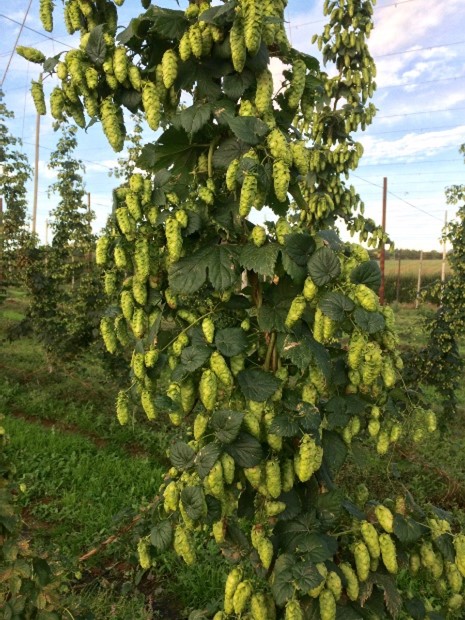
British Harlequin hops, on the bine, at a Charles Faram grower’s farm
The first PhD project, initiated in January 2025, aims to investigate how biochar (a form of high-carbon charcoal intended for use in soil) can support British hop farming. It’s exploring whether biochar application can enhance soil health, suppress diseases such as Verticillium Wilt, increase carbon storage, and enhance nutrient and water retention.
Notably, it has started by evaluating the effect of biochar type and dose on early growth of hop varieties, then from this year onwardsis investigating its impact on disease incidence, plant health, and yield in controlled glasshouse and field trials. This will culminate in the development of best-practice guidelines for integrating biochar into hop production systems for growers.
The second project, starting soon, will look into harnessing wildflowers to revitalise British hops. This project aims to investigate how wildflower interventions can support hop production through improved soil health and carbon storage, boost pest regulation services and benefit biodiversity as a whole.
It will start by identifying perennial wildflowers that can grow alongside hops without increasing disease rates, then move onto establishing wildflower strips in hop yards to measure the real-world impacts.
The future of British beer depends on what happens in hop yards today. Climate change, soil degradation, and disease are converging to create a genuine tipping point — but they are not insurmountable. Through initiatives like FOR HOPS UK, growers now have the opportunity to access and trial new methods, share data and scale what works. By changing the system today, the brewing industry can protect hop farming for a resilient and sustainable future.